Trombone Slide Position Chart
Download this chart (SVG) Trombone Slide Position Chart, printable and free to use.
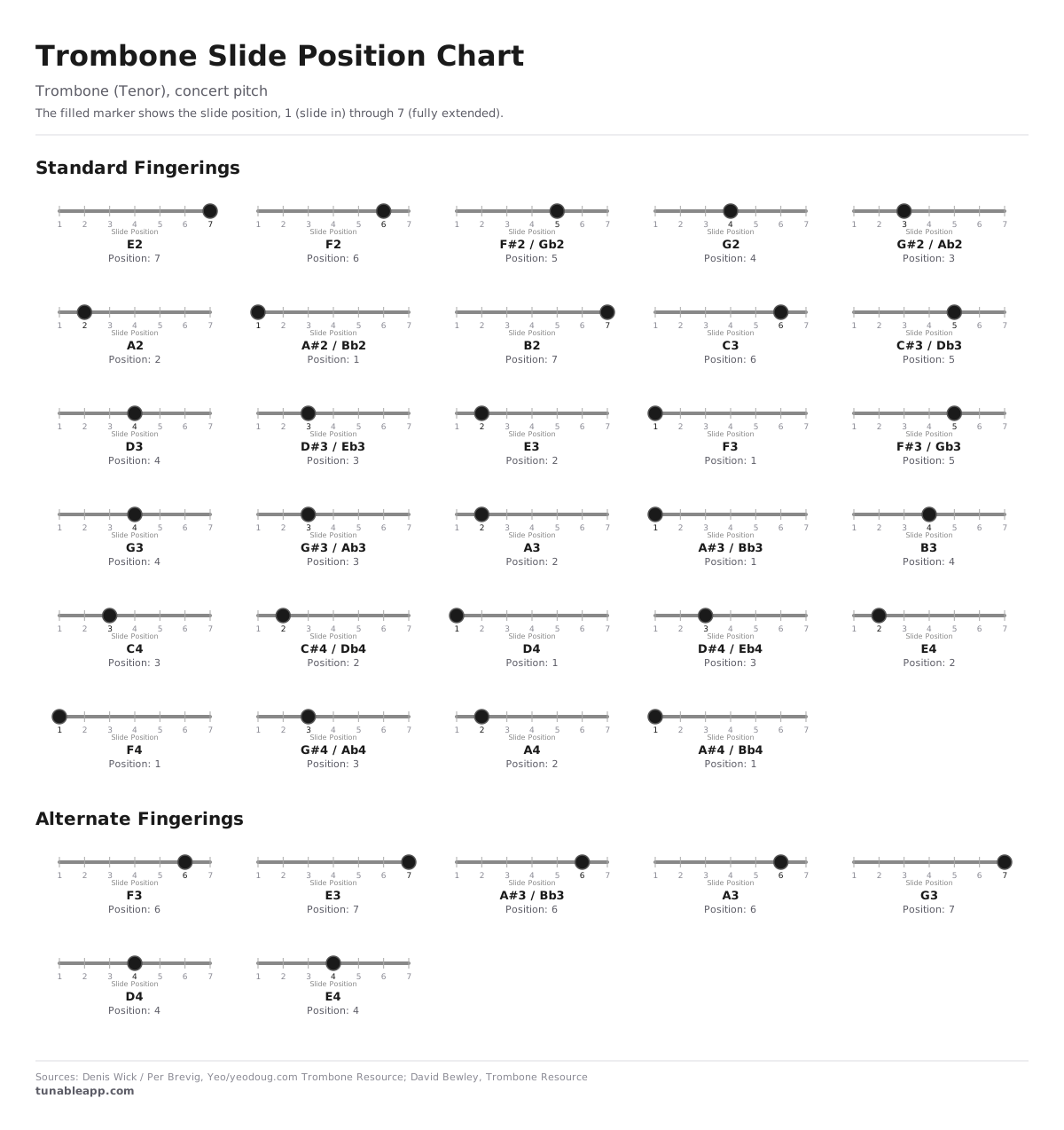
The trombone is a concert pitch instrument with a Bb fundamental. Seven slide positions produce the full chromatic scale. Position 1 (slide fully in) is the highest for each harmonic partial; position 7 (fully extended) is the lowest.
How to Read This Chart
Each slide diagram shows positions 1–7 on a horizontal bar. The active position is highlighted with a filled circle. Position 1 is the slide fully in; position 7 is fully extended. Concert pitch is listed for all notes.
Standard Fingerings, Slide Positions
| Note (Concert) | Position | Notes |
|---|---|---|
| E2 | 7 | 7th position, lowest position; concert E2, 2nd partial |
| F2 | 6 | 6th position, concert F2, 2nd partial |
| F#2 / Gb2 | 5 | 5th position, concert F#2, 2nd partial |
| G2 | 4 | 4th position, concert G2, 2nd partial |
| G#2 / Ab2 | 3 | 3rd position, concert Ab2, 2nd partial |
| A2 | 2 | 2nd position, concert A2, 2nd partial |
| A#2 / Bb2 | 1 | 1st position (fully in), concert Bb2; fundamental of the instrument |
| B2 | 7 | 7th position, concert B2, 3rd partial |
| C3 | 6 | 6th position, concert C3, 3rd partial |
| C#3 / Db3 | 5 | 5th position, concert C#3, 3rd partial |
| D3 | 4 | 4th position, concert D3, 3rd partial |
| D#3 / Eb3 | 3 | 3rd position, concert Eb3, 3rd partial |
| E3 | 2 | 2nd position, concert E3, 3rd partial |
| F3 | 1 | 1st position, concert F3, 3rd partial |
| F#3 / Gb3 | 5 | 5th position, concert F#3, 4th partial |
| G3 | 4 | 4th position, concert G3, 4th partial |
| G#3 / Ab3 | 3 | 3rd position, concert Ab3, 4th partial |
| A3 | 2 | 2nd position, concert A3, 4th partial |
| A#3 / Bb3 | 1 | 1st position, concert Bb3, 4th partial |
| B3 | 4 | 4th position, concert B3, 5th partial |
| C4 | 3 | 3rd position, concert C4, 5th partial |
| C#4 / Db4 | 2 | 2nd position, concert C#4, 5th partial |
| D4 | 1 | 1st position, concert D4, 5th partial |
| D#4 / Eb4 | 3 | 3rd position, concert Eb4, 6th partial |
| E4 | 2 | 2nd position, concert E4, 6th partial |
| F4 | 1 | 1st position, concert F4, 6th partial |
| G#4 / Ab4 | 3 | 3rd position approx, concert Ab4, 7th partial (slightly flat; lip up) |
| A4 | 2 | 2nd position approx, concert A4, 7th partial (adjust intonation) |
| A#4 / Bb4 | 1 | 1st position, concert Bb4, 7th partial (slightly flat; adjust embouchure) |
Alternate Fingerings
Alternate fingerings produce the same pitch but are used for smoother technique in specific musical contexts.
| Note (Concert) | Position | Notes |
|---|---|---|
| F3 | 6 | 6th pos alternate, concert F3; same note as 3rd-partial 6th and 6th-partial 6th; use when 1st is not accessible |
| E3 | 7 | 7th pos alternate, concert E3; avoids 2nd position when coming from 7th |
| A#3 / Bb3 | 6 | 6th pos alternate for 4th-partial Bb3; avoids 1st pos in certain tenor clef passages |
| A3 | 6 | 6th pos, alternate 3rd-partial A3; use when 2nd pos is already occupied |
| G3 | 7 | 7th pos, alternate for G3 in passages coming from low register |
| D4 | 4 | 4th pos, alternate 5th-partial D4 (slightly flat vs 1st pos; used in certain passage contexts) |
| E4 | 4 | 4th pos, alternate 6th-partial E4; useful in fast passages |
Harmonic Series by Position
Each of the 7 slide positions produces a different fundamental pitch and a full harmonic series above it. Position 1 (slide in) has Bb as its fundamental; each successive position lowers the fundamental by a semitone. The natural harmonics available in each position are:
- 1st position: Bb2, Bb3, F4, Bb4, D5, F5, Ab5 (fundamental: Bb2)
- 2nd position: A2, A3, E4, A4, C#5, E5, G5
- 3rd position: Ab2, Ab3, Eb4, Ab4, C5, Eb5, Gb5
- 4th position: G2, G3, D4, G4, B4, D5, F5
- 5th position: F#2, F#3, C#4, F#4, A#4, C#5, E5
- 6th position: F2, F3, C4, F4, A4, C5, Eb5
- 7th position: E2, E3, B3, E4, G#4, B4, D5
The standard fingering chart above lists the most common position for each note. Alternate positions may be used when a different harmonic partial is more accessible in context.
Sources: Denis Wick / Per Brevig, Yeo/yeodoug.com Trombone Resource; David Bewley, Trombone Resource
Practice with Tunable's free chromatic online tuner.
← Back to Trombone (Tenor) overview
Tune your Trombone (Tenor)
Tunable is the professional tuner trusted by musicians who play Trombone (Tenor). Available on iOS and Android.